Energy-Efficient Home Design Drafting Services
Drafting that treats the building envelope as one connected system, not a checklist of R-values. If you want a home that holds its temperature, cuts utility costs, and clears energy-code review without a redesign, this is where that starts.
What Energy-Efficient Home Design Drafting Is
Energy-efficient home design is drafting that accounts for how a house actually performs once it's built, not just how it looks on paper. That means paying attention to the building envelope (the walls, roof, foundation, windows, and doors that separate conditioned space from the outside) as a connected assembly, and applying passive design principles where the site and budget allow: orientation, window placement, shading, and airflow that work with the climate instead of against it.
This service is for homeowners and builders who want their plans to reflect energy performance from the start, whether that's driven by utility cost concerns, a tighter climate zone, a personal sustainability goal, or a jurisdiction that expects clear envelope and compliance documentation at permit review. It's also a strong fit for anyone building a accessory dwelling unit or an addition where a small, well-sealed footprint makes energy performance especially noticeable.
This is not a bolt-on service where we scribble "R-30" on a wall section and call it done. Envelope-conscious drafting changes how the assemblies are detailed, how the drawings communicate air sealing and continuity of insulation, and how those details are coordinated with the rest of the plan set.
What's Included
Envelope-focused drawings
- Wall, roof, and foundation assembly details showing insulation placement and continuity
- Air sealing and thermal bridging call-outs at framing transitions, penetrations, and connections
- Window and door schedules noted with performance considerations relevant to the assembly
Passive and site-aware design input
- Building orientation and window placement recommendations based on your site and sun exposure
- Shading and overhang considerations where they support passive heating and cooling
- Coordination notes for mechanical, insulation, and envelope trades to keep the design intent intact through construction
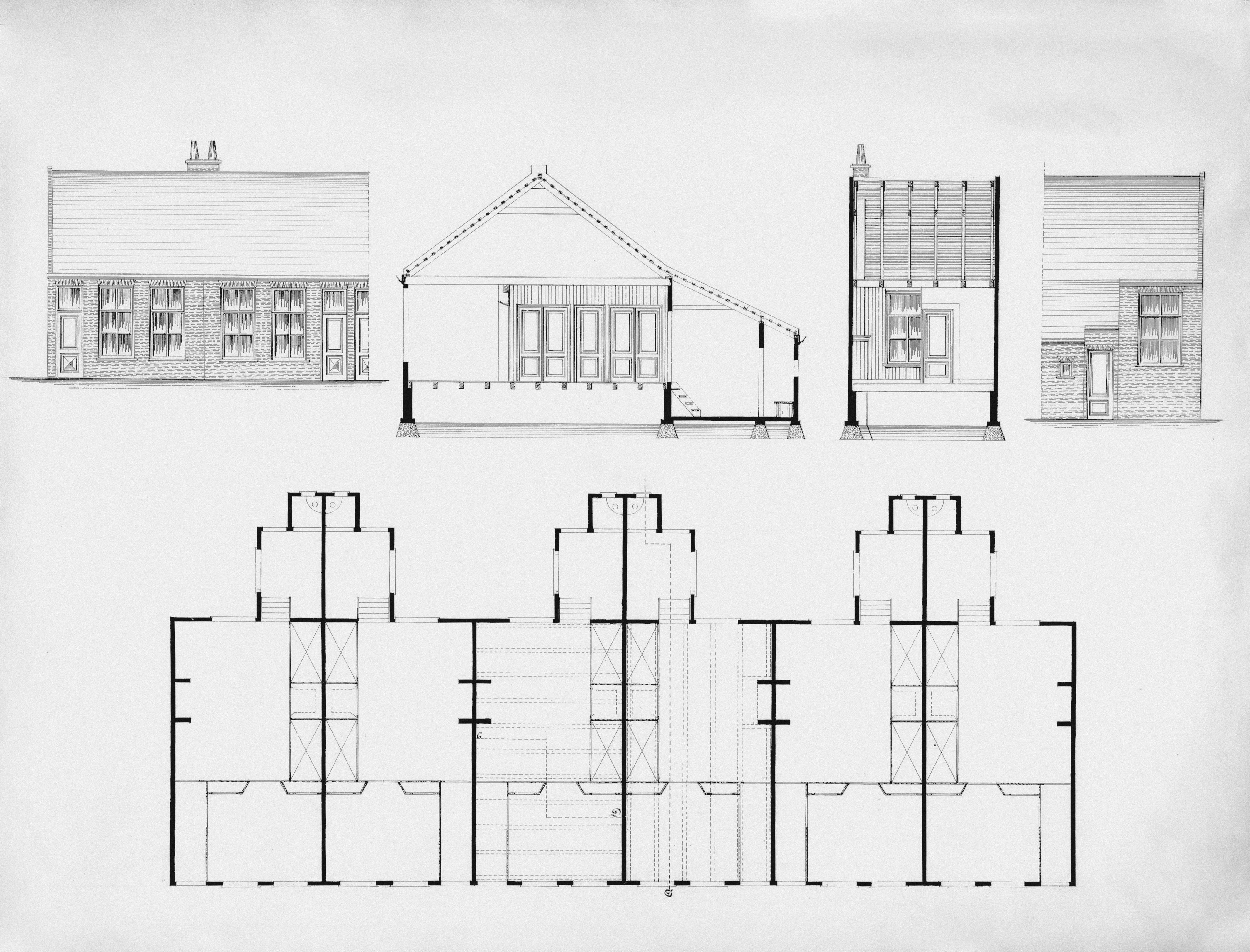
Illustrative reference drawing, not an Apex Drafting client project.
As with all our drafting work, a full permit-ready plan set (floor plans, elevations, sections, and required details) is built around the envelope strategy, not layered on top of it afterward. If your project also needs formatted permit submission documents, that's covered under Permit-Ready Drawings & As-Builts.
Our Process for Energy-Efficient Design
- Quote and goals conversation. We talk through your climate, site, budget, and what "energy-efficient" means for your project specifically, whether that's a code-driven requirement, a performance target, or a general preference for a tighter, better-insulated home.
- Envelope and passive design planning. Before we lock in layout details, we look at orientation, glazing, and assembly strategy so the envelope decisions are baked into the design rather than retrofitted.
- Drafting. We produce the full drawing set with envelope details, insulation and air sealing call-outs, and coordination notes built in.
- Review and revisions. You review the set and request changes. A set number of revisions is included and confirmed at quote.
- Delivery. You receive the final drawing files, ready for your energy consultant, contractor, and local permitting process.
Working on an Energy-Efficient Design project right now?
Send us the lot and what you want to build. We'll confirm which local rules apply to your parcel and come back with a firm number, at no cost.
Turnaround
Timelines vary by project scope and jurisdiction. Energy-efficient design projects can involve more coordination than a standard plan set, particularly when local energy-code compliance paths or third-party energy modeling are part of the picture, so we confirm a realistic schedule with you once we understand the full scope at quote.
See Examples
Want to see how we approach envelope and passive design details in a finished set? Visit our portfolio page for example work as it becomes available.
Frequently Asked Questions
Is energy-efficient design just about adding more insulation?
No. Insulation is one part of it. Energy-efficient design is about how the entire building envelope works together: wall and roof assemblies, air sealing details, window placement and glazing, thermal bridging at framing connections, and how the home is oriented on the lot. We draft the assembly, not just a note that says "add insulation."
Do you design to a specific energy code, like IECC?
Energy codes vary by state and by the version each jurisdiction has adopted, and requirements can change. We draft with an awareness of common energy-code compliance paths and build documentation that supports whatever path your jurisdiction and energy consultant confirm applies to your project. We recommend verifying the current adopted code and any required compliance forms with your local building department before permit submission.
Can you add energy-efficient design to a custom house plan I'm already having drafted?
Yes. Envelope and passive design considerations are usually built directly into a Custom House Plans project from the start, but they can also be layered onto a stock plan or an in-progress design. Tell us your goals during quoting so we can scope it correctly.
Will these drawings include energy modeling or a HERS rating?
We provide the architectural drafting and envelope detailing. Formal energy modeling, HERS ratings, and code compliance certificates are typically handled by a separate licensed energy rater or consultant, and we coordinate our drawings to support that process.
How long does an energy-efficient design project take?
Timelines vary by project scope and jurisdiction, especially when envelope detailing and energy-code coordination are involved. We confirm an expected schedule and revision count with you at the time of quote.
Do you work with clients outside Texas, Florida, New York, California, Arizona, and Utah?
Our drafting work is 100% remote and we serve clients nationwide. Texas, Florida, New York, California, Arizona, and Utah are our primary focus markets, but location does not limit whether we can take on your project.
Get a Free Quote for Your Energy-Efficient Design Project
Tell us what you're building and we'll scope it, confirm the timeline, and give you a firm number before any drafting starts. Every plan set is drafted to your local jurisdiction's documentation standards.
Prefer to talk it through? Call (435) 990-3556.
Build a Home That Performs as Well as It Looks
Tell us about your project and we'll put together a straightforward quote, envelope strategy included.